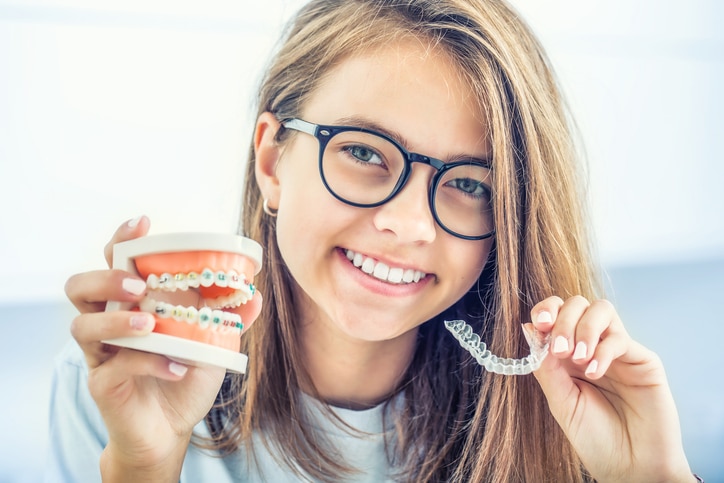
Orthodontic treatments have seen significant advancements over the years, offering patients more options. Among these choices, Invisalign and traditional braces are the most popular. But which one is right for you? Let’s explore the details of these treatments and help you make an informed decision.
Orthodontic treatments have come a long way since the days of bulky metal braces. Today, patients seeking to straighten their teeth can choose between traditional braces and the increasingly popular Invisalign system. Both treatments offer unique benefits, and understanding these can help you make the best choice for your smile.
In this blog post, we’ll comprehensively compare Invisalign and traditional braces. We’ll discuss how each treatment works, their effectiveness, comfort and aesthetics, costs, and other essential factors to consider. Whether you’re a teen, an adult, or a parent exploring options for your child, this guide aims to provide valuable advice and insights to help you decide.
Invisalign has revolutionized orthodontic treatment with its clear aligner system. Here’s a closer look at how it works:
The Invisalign treatment process starts with a thorough consultation with your orthodontist at King Orthodontics. During this initial visit, a digital scan of your teeth is taken to create a custom-fit treatment plan. This plan is used to outline the gradual movement of your teeth and predicts the final result.
Invisalign uses sets of clear, removable aligners made from smooth, BPA-free plastic. These aligners are created custom to fit snugly over your teeth and are designed to more the teeth gradually into the desired position. You typically wear each set of aligners for roughly two weeks and then you would switch to the next set in the series.
The total treatment time with Invisalign varies depending on the complexity of your case, but it generally ranges from 12 to 18 months. Regular check-ups with your orthodontist ensure that your teeth are moving as planned throughout the treatment.
Traditional braces have been the standard treatment in orthodontic care for decades. This type of braces are made up of metal brackets that are bonded to your teeth and connected by wires and rubber bands. Here’s what to expect with traditional braces:
While metal braces are the most common, other options include ceramic braces (which are less noticeable) and lingual braces (attached behind the teeth). Each type has its advantages and suitability depending on the patient’s needs.
Getting traditional braces involves bonding brackets to your teeth and connecting them with wires. Regular adjustments are necessary in order to tighten the wires, gradually shifting your teeth into place. Maintenance includes avoiding certain foods and practicing meticulous oral hygiene to prevent issues like plaque buildup and tooth decay.
The duration of treatment with traditional braces ranges from 18 to 24 months, depending on how severe your orthodontic issues are. More complex orthodontic cases may require longer treatment times.
Both Invisalign and traditional braces effectively treat a wide range of orthodontic issues. However, there are differences in their capabilities:
Invisalign is highly effective and efficient for mild to moderate orthodontic problems, including crowded teeth, gaps, and minor bite issues. However, it may not be suitable for more severe cases or complex movements, which still require the precision of traditional braces.
Traditional braces are versatile and can handle nearly all orthodontic problems, from simple to complex. They are particularly effective for significant bite issues, severe crowding, and cases requiring the movement of teeth in multiple directions.
Comfort and appearance are crucial factors when choosing an orthodontic treatment:
Comfort
Invisalign aligners are smooth and more comfortable to wear, with no sharp edges or protruding parts. They can be easily removed for drinking, eating, and oral hygiene, reducing the risk of discomfort and irritation. Traditional metal braces can cause soreness and irritation, especially after adjustments.
Aesthetics
Invisalign’s clear aligners are virtually invisible, making them attractive for teens and adults who prefer a discreet option. While more noticeable, traditional braces offer choices like ceramic braces for a less conspicuous look.
Invisalign aligners can be removed for sports, special occasions, or playing musical instruments, offering greater flexibility. Traditional braces, however, require some lifestyle adjustments, such as avoiding certain foods and being cautious during physical activities.
Understanding the costs and insurance coverage for each treatment is essential:
Invisalign Costs
Invisalign treatment costs will vary based on the complexity of your case but generally range from $3,000 to $8,000. Many dental insurance plans will cover Invisalign similarly to traditional braces, and financing options are often available.
Traditional Braces Costs
The cost of traditional braces also varies, typically ranging from $2,000 to $7,000. Insurance coverage is usually available, and many orthodontic practices offer payment plans to make treatment more affordable.
Financing Options
Both Invisalign and traditional braces offer financing options to help manage the cost of treatment. These may include monthly payment plans, flexible spending accounts (FSAs), and health savings accounts (HSAs).
When deciding between Invisalign and traditional braces, consider these personal factors:
Age and Lifestyle
Invisalign is popular among teens and adults who prioritize aesthetics and convenience. Traditional braces are great for patients of all ages, including children with more complex orthodontic needs.
Orthodontic Issues
The severity and type of orthodontic issues you’re dealing with will influence your choice. Invisalign is highly efficient for mild to moderate cases, while traditional braces are better suited for complex problems.
Personal Preferences
Your personal preferences, like the desire for discreet treatment or the willingness to commit to maintenance, play a significant role in your decision. Discuss these with your orthodontist to find the best fit for you.
Choosing between Invisalign and traditional braces is an important decision that depends on various factors. Both treatments offer unique benefits and can effectively straighten your teeth and improve your smile.
We recommend consulting an experienced orthodontist at King Orthodontics to discuss your specific needs and preferences.
We can provide personalized advice and help you make the best decision for your situation. Don’t hesitate to book a consultation with King Orthodontics to start your journey toward a beautiful, confident smile.